
It is handmade, exciting and has a strong character. Although craft beer originated in backyard breweries in the USA, its philosophy has since spread across the globe.
Flatbed embossing can be used to enhance digital prints or metallic finishes, creating a visual and tactile experience usually only found on luxury products.
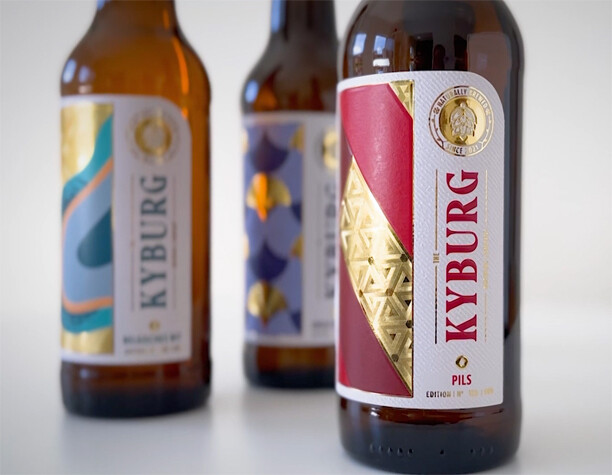
With the objective of meeting the requirements for haptic embellishment, the tool manufacturer H+M, the designer Zweischneider, the foil specialist Kurz, the printing company All4Labels and Pantec have cooperated and created the production example “Kyburg Craft Beer” to demonstrate the possibilities.





When it comes to small-batch packaging and label production, digital applications are usually the preferred option. Digital printing produces results that are on a par with those of traditional printing processes, and digital metallisation can also deliver a shiny finish. However, applying haptic effects is currently beyond the capabilities of digital solutions. Hard edges, various embossing shapes, and nano- and micro-embossing can only be achieved using analogue methods.
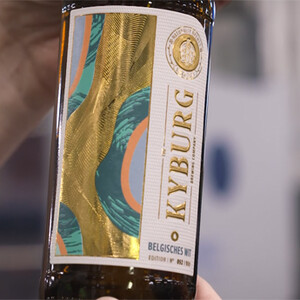
The days of “digital versus analogue”, when the two technologies competed against each other, are long gone. 'Analogue meets digital' is the name of the game now. Here, the advantages of both technologies can be combined to ensure the product is recognised.
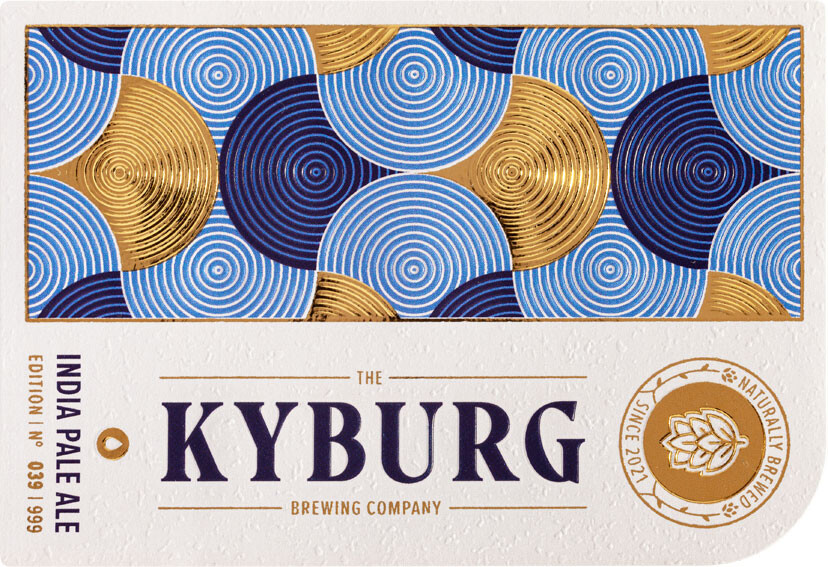
With the analog application of haptic effects as well as nano and micro embossing in the blind embossing process, both the digital metallisation and the substrate are being enhanced
Six different motifs were produced for the 'Kyburg Craft Beer' sample, resulting in a total of 6,000 labels. First, a digital transfer solution is used to apply the metallic effect to the blank substrate. In the second step, the colours are added using digital printing. In the third step, the label is refined with haptic and visual effects using the flatbed embosser.

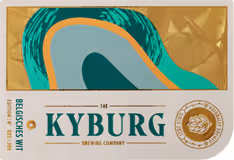
Haptics is considered the first sensory channel, researchers describe it as a sense of truth with which whatever that is seen can be verified. Haptic effects are particularly appealing to consumers – an invitation to touch and grasp. These are the best possible complements to visual effects, and together they create an eye-catching, individual brand design.
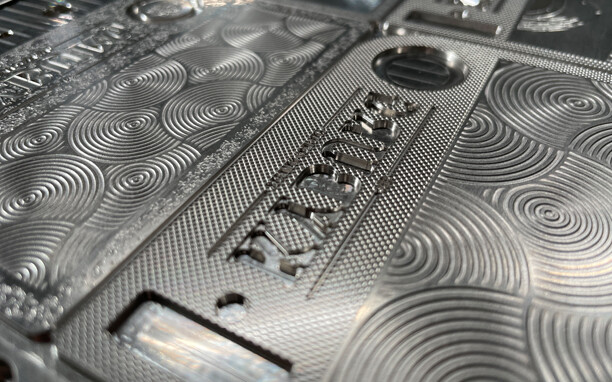
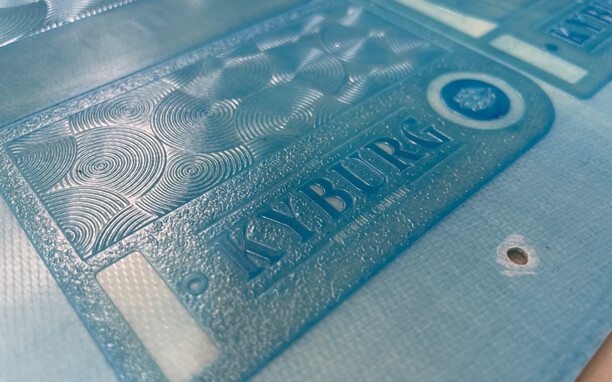
Embossing tools allow an optical improvement of designs with the addition of haptic elements.
The 'Kyburg Craft Beer' labels demonstrate the variety of possibilities that can be achieved through the combination of digital and analogue processes. Nano- and micro-embossing, as well as relief embossing, transform the coloured and golden surfaces into a landscape of light, refractions, shadows, and tactile grooves and edges. Finally, blind embossing of the background texture gives the label material the appearance of structured paper, enhancing its value. This is achieved using the embossing quality of the RHINO® and the precise embossing tools from H+M, which transform the labels into real eye-catchers.
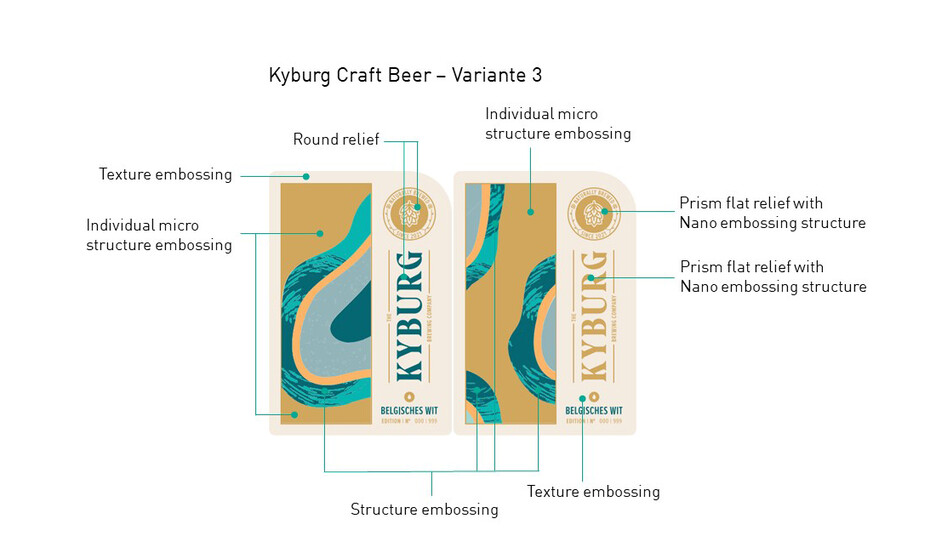
Both printed and metallic elements can be given a high-end embossed finish. This shapes the substrate three-dimensionally in the pre-printed or metallic areas.
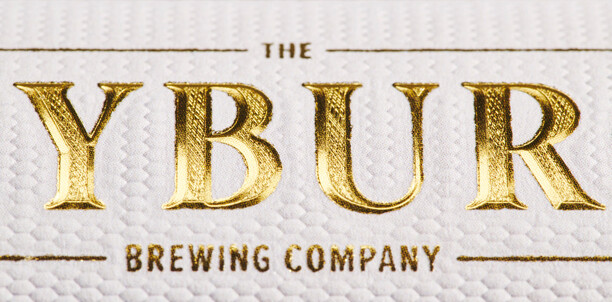
Micro and nano embossing involves working very fine patterns into the stamping die. This distorts the metallised surface of the substrate, creating impressive optical reflection effects. The result is both eye-catching and difficult to copy.
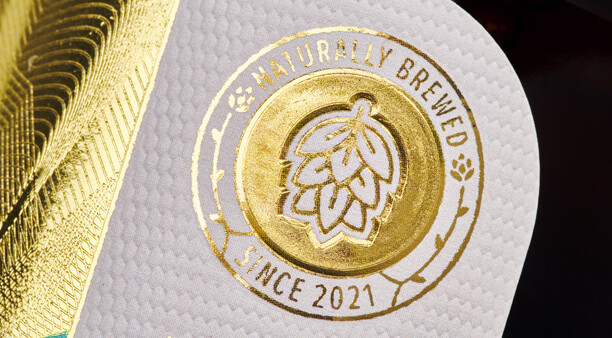
When the correct parameters are used, blind embossing can be employed to give the substrate an individual structure. This enables unique surfaces to be created on basic substrates.
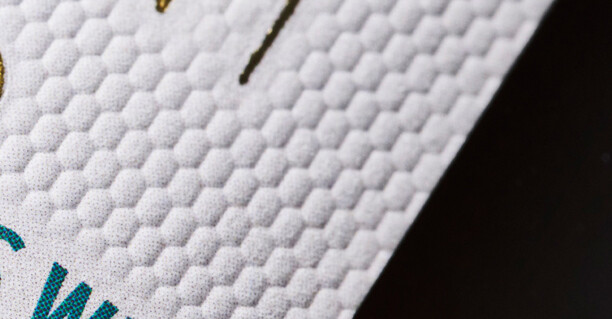
When it comes to the high-quality embellishment of labels and packaging, foil embossing, applied via a hot stamping process, is the undisputed leader. This is evident in the precise embossed edges, impressive relief depths and striking gloss.
The only disadvantage of this process is that, when changing jobs, both the embossing tools and the foils have to be swapped out. While this is not a problem for medium runs, for short runs — such as regional products — the downtime for changing the foils and embossing tools becomes the deciding factor for economic implementation.
The solution: the metallisation is applied by the digital process and the tactile effects by an embossing tool. This means that only the embossing tool needs to be changed on the embossing machine, which can be done quickly with a quick-change system like on the Pantec RHINO®. In addition, the investment in the flat embossing system is considerably lower because the machine can be purchased without a foil attachment.
By supplementing printed or metallised elements with embossing, extraordinary visual and haptic effects can be achieved.

“It is advisable to focus on central elements in the embellishment design, such as the logo. Then the required embossing tools can permanently remain in the machine. A logo provided with micro embossing can thus become a trademark with a high recognition value.”
Berat Abazi
Application Engineer | Pantec Schweiz AG
A central cost factor in flatbed embossing is the embossing tool. With variable small jobs, however, it does not necessarily mean that a separate embossing tool is needed for each job. On the contrary: a smart design concept makes it possible to implement the majority of jobs on the basis of one main tool. If new personalisations are to be refined, this can simply be added to the existing embossing tool.
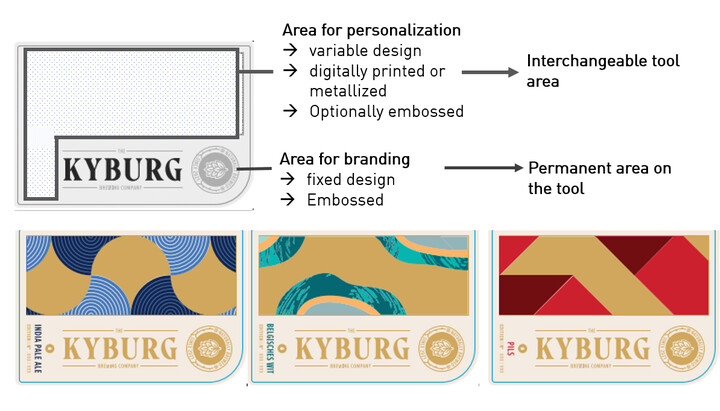
The design is divided into two sections. The branding area is where the logo and visuals are embossed in relief. This embossing tool can be used at any time. For embossing in the personalised area, however, inserts must be used in the embossing die. This has a positive effect on set-up times and costs.

“The demand for embellishment is still high, it’s even increasing. But it’s changing. We are currently observing a development away from classic hot embossing towards transfer finishing with additional blind embossing. We’re working solely with the deformation of the paper and can thus create a variety of impressions that can be precisely matched to the respective brand design.”
Thomas Löchner
Creative Manager | Hinderer + Mühlich GmbH & Co. KG
From a production technology point of view, two factors are essentially decisive for the selection of a suitable flatbed system. On the one hand, the demands on the embossing quality are extremely high so that effects such as 3D embossing or micro/nano structures can be realised. On the other hand, a quick changeover of the machine must guarantee productive operation.
Ready to take the next step?
Curious how flatbed embossing can elevate your digital print jobs? Let’s find the right hybrid workflow for your production.
Get in Touch